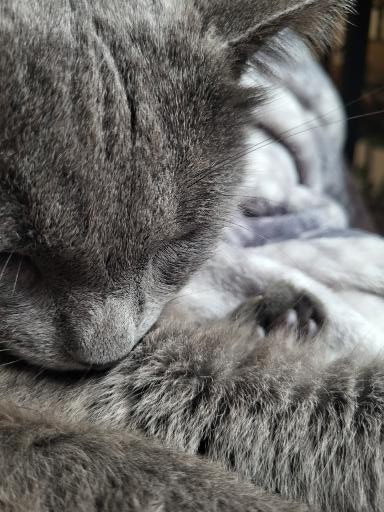
Water Is an Ingredient
Why the quality, source, and availability of your animal’s water deserve as much thought as what goes in the food bowl.
We spend a lot of time thinking about what we feed our animals.
We compare ingredients. Read labels. Debate proteins, preservatives, supplements, and sourcing. We notice when a food doesn’t agree with them and sometimes spend months finding one that does.
Then we walk over to the sink, fill the water bowl, and rarely give the water itself another thought.
But water is an ingredient, too.
It participates in virtually every physiological system in the body: circulation, digestion, temperature regulation, kidney function, electrolyte balance, waste removal, and the transport of nutrients. And unlike a treat or supplement, it is something our animals consume every single day.
So I think it’s reasonable to ask two separate questions: Is my animal drinking enough water? And what is actually in the water they’re drinking?
“Safe to Drink” and “Nothing in It” Are Not the Same Thing
Public drinking water in the United States is regulated, and filtration is not an admission that all tap water is inherently unsafe.
But drinking water is also not chemically empty.
Its composition varies by geography, source, treatment system, household plumbing, and even the journey between the municipal system and your faucet. Depending on the water supply, measurable constituents can include minerals, treatment byproducts, metals, PFAS, and other compounds.
A particularly interesting 2025 pilot study from the Dog Aging Project tested drinking water supplied to companion dogs living in homes with non-municipal water sources across several U.S. states. Researchers detected all of the metals they tested for and found multiple measurements of elements including arsenic, lead, copper, nickel, and others above EPA maximum-contaminant or health-guidance levels. The authors were careful not to conclude that those exposures caused disease, but the results demonstrated something wonderfully simple: the water our dogs drink is an environmental exposure worth studying.
That study focused on dogs drinking primarily non-municipal water, so it is not evidence that everyone’s tap water is contaminated. It is evidence that source matters.
And because our animals generally drink what we provide, they don’t get much say in that exposure.
Chlorination, Fluoride and the Urinary System
Two common components of drinking water deserve a little more nuance: chlorine-based disinfection and fluoride.
Chlorination has been enormously important for controlling waterborne disease, but chlorine can react with naturally occurring organic material in water to create disinfection byproducts, including trihalomethanes, or THMs. These compounds — rather than chlorine alone — are where much of the long-term urinary-health research has focused.
A 2025 meta-analysis examining 16 epidemiological studies found a positive association between longer-term exposure to THMs in drinking water and bladder cancer risk, although the strength of the evidence varied by study design and the authors did not establish a simple causal relationship. Earlier large studies have reported similar associations, which is one reason THMs are regulated in public drinking water.
Fluoride raises a somewhat different question because the kidneys play an important role in removing it from the body. In a U.S. population study of nearly 2,000 adolescents, higher plasma fluoride was associated with lower estimated kidney filtration and higher serum uric acid. More recent analyses have reported similar associations between urinary fluoride and lower kidney filtration. These studies are observational, so they cannot tell us whether fluoride contributed to reduced kidney function, whether reduced kidney function caused fluoride to accumulate, or some combination of the two.
That distinction matters. The evidence does not justify saying that ordinary fluoridated water causes kidney disease. It does give us another reason to recognize that water composition and long-term exposure are physiologically relevant — particularly because the kidneys and urinary tract are responsible for concentrating and eliminating so much of what enters the body.
And while most of this research is currently in humans rather than companion animals, it reinforces the broader reason I prefer knowing what is in the water I provide rather than treating tap water as chemically neutral.
Why I Prefer Filtered Water
I prefer giving animals filtered water for the same reason I filter the water I drink: it is one relatively simple variable I can control.
Not because a filter creates magically “pure” water. It doesn’t.
Different filters remove different things. A basic activated-carbon pitcher is not equivalent to reverse osmosis, and neither is useful if it isn’t designed for the contaminant you’re concerned about. The EPA specifically recommends choosing filtration based on what is actually present in the water and looking for independent certification for the contaminant being targeted. For example, activated carbon, ion-exchange systems, and reverse osmosis can reduce certain PFAS, while properly certified filters can also reduce lead.
And filters have to be maintained. An old cartridge that hasn’t been changed according to its instructions isn’t doing the job we bought it to do.
So my argument for filtered water is not “tap water bad, filtered water good.”
It’s simpler than that: know your water, and reduce avoidable exposures where it makes sense.
If you’re on a private well, testing becomes particularly important because private wells are not regulated and monitored in the same way as public drinking-water systems. If you’re on municipal water, your local utility’s water-quality report can tell you a great deal about the water entering the system—and if you’re concerned about something introduced through older household plumbing, testing at the tap can tell you even more.
Filtration works best when we know what we’re asking it to filter.
With Cats, the Bigger Problem May Be Getting Water In
Water quality matters across species, but cats deserve special attention because the amount of water they consume is its own story.
Domestic cats descended from animals adapted to relatively arid environments, and their biology developed in the context of prey that naturally contained a great deal of moisture. Modern cats can therefore obtain substantial amounts of their daily water from food rather than from standing at a bowl and drinking. Recent research continues to show that diet format has a major influence on total water intake.
A 2025 review of 32 studies found that cats eating dry diets generally had lower total water intake and more concentrated urine than cats consuming wet diets or certain water-supplemented regimens. The authors noted that cats reaching higher total daily water intakes tended to do so through moisture-rich food or supplemented hydration rather than simply compensating by drinking dramatically more from a bowl.
This matters because increasing water intake and producing more dilute urine are important considerations in feline urinary health. Current feline lower-urinary-tract guidelines recommend encouraging water intake across cats with lower urinary tract disease.
We’ll get much deeper into that in the next article.
But the practical lesson here is important: putting out a bowl of water does not automatically mean a cat is optimally hydrated.
Wet Food Really Does Change the Equation
This is one place where the laboratory data are especially useful.
Researchers have fed cats nutritionally standardized diets that differed primarily in moisture content. In one crossover study, cats consuming the highest-moisture diet took in significantly more total fluid and produced more dilute urine, with lower relative supersaturation for calcium oxalate than cats consuming the low-moisture diet. Interestingly, as dietary moisture increased, the cats voluntarily drank less free water—but their total water intake still increased.
In other words, watching how many trips your cat makes to the water bowl doesn’t tell you the whole hydration story.
The water mixed into dinner counts.
For cats especially, I think of hydration as something we build into the day, not something we simply hope they remember to do.
And No, Every Cat Does Not Need a Fountain
I love a good cat fountain.
Some cats love a good cat fountain.
But the science is a nice reminder not to turn preferences into universal biological laws.
Studies comparing still bowls with circulating or free-falling water sources have generally not found a consistent increase in water intake across all cats. Individual preferences absolutely exist—some cats preferred particular water presentations—but there was no magical fountain effect shared by everyone.
Which is very on-brand for cats, frankly.
If your cat drinks more from a fountain, wonderful. Use the fountain.
If she prefers the suspiciously ordinary glass you accidentally left on the nightstand while ignoring the $70 stainless-steel waterfall you bought specifically for her, congratulations: you have a cat.
The goal is not to own the correct accessory.
The goal is to learn what gets this animal to drink.
Palatability Counts
This is another reason I like filtering water even when contamination isn’t an immediate concern.
Water has taste and smell.
Chlorine, minerals, plumbing, storage, and filtration can all affect its sensory characteristics. And when we’re talking about an animal whose sense of smell is dramatically more sensitive than ours, I don’t think palatability should be dismissed just because we think the water tastes fine.
That doesn’t mean every dog or cat prefers filtered water; we don’t have evidence for that universal claim.
It means the water an animal is willing to drink matters.
If changing the water source, temperature, bowl location, or presentation noticeably increases an animal’s voluntary drinking, that is useful information.
Especially with an animal for whom hydration is already a concern.
Fresh Water Also Means a Fresh Bowl
Filtering the water and then pouring it into a bowl with yesterday’s saliva film rather defeats some of the intention.
Water bowls accumulate organic material and microorganisms through saliva, food particles, paws, noses, and the surrounding environment. Research on pet bowls confirms that household feeding vessels can carry substantial microbial loads and that cleaning practices influence contamination.
So refresh the water.
Actually wash the bowl.
If you use a fountain, take the fountain apart and clean the pieces you wish weren’t removable but absolutely are.
And change the filter.
A clean water source isn’t only about what comes from the faucet. It’s about what happens after the water reaches the animal, too.
Watch for Changes
There is one more reason I pay attention to water: changes in drinking behavior are information.
If an animal who normally barely touches the bowl suddenly drains it repeatedly, notice.
If a dog who normally drinks enthusiastically suddenly won’t, notice.
If a cat starts visiting the bowl much more often, urinating substantially more, struggling to urinate, or producing unusually small amounts, notice.
The amount an animal drinks can change with weather, exercise, diet, medications, age, and plenty of harmless circumstances, so one thirsty afternoon doesn’t diagnose anything.
But a persistent change from that animal’s baseline can matter.
Water is not background scenery in the body.
It is part of the story.
Give Water the Same Consideration You Give Food
I don’t think animal care has to become an endless search for microscopic dangers.
That’s exhausting, and it isn’t particularly useful.
But I do think we should question the things that become invisible simply because they’re routine.
Water is one of them.
Find out where yours comes from. Look at your local water-quality information. Test it when there is reason to. If you’re filtering, use a filter designed for what you actually want to reduce and maintain it properly. Keep bowls clean. Give animals multiple opportunities to drink. And for cats especially, remember that hydration can happen through food as well as through the water bowl.
We don’t need to be afraid of water to give it more thought.
We just need to remember that it is an ingredient.
Sources & Further Reading
Sexton, C.L., O’Brien, J., Lytle, J., et al. (2025). Testing for heavy metals in drinking water collected from Dog Aging Project participants. PLOS Water. This pilot study analyzed drinking water supplied to companion dogs using non-municipal water sources and demonstrated measurable variation in metal exposures, including some values exceeding EPA maximum-contaminant or health-guidance levels.
Kosmal, P.A.L., et al. (2025). Diet format, protein, amino acids, salt, and osmolytes, as well as water viscosity, affect water consumption in domestic cats: a scoping review of 32 publications (1975–2025). Journal of Animal Science. The review found substantial variation in feline water intake and highlighted the importance of dietary moisture in total hydration and urinary concentration.
Buckley, C.M.F., Hawthorne, A., Colyer, A. & Stevenson, A.E. (2011). Effect of dietary water intake on urinary output, specific gravity and relative supersaturation for calcium oxalate and struvite in the cat. British Journal of Nutrition. Cats fed a high-moisture diet had greater total fluid intake and more dilute urine than when fed lower-moisture diets.
Malin, A.J., Lesseur, C., Busgang, S.A., et al. (2019). Fluoride exposure and kidney and liver function among adolescents in the United States: NHANES, 2013–2016. Environment International, 132, 105012. Higher plasma fluoride was associated with lower estimated glomerular filtration rate and higher serum uric acid in U.S. adolescents.
Malin, A.J., et al. (2025). Urinary fluoride and dental fluorosis in relation to kidney and liver function in adolescents and young adults in the United States. Higher urinary fluoride and evidence of chronic fluoride exposure were cross-sectionally associated with lower estimated kidney filtration; the authors specifically called for prospective studies to determine whether the relationship is causal.
Robbins, M.T., Cline, M.G., Bartges, J.W., et al. (2019). Quantified water intake in laboratory cats from still, free-falling and circulating water bowls, and its effects on selected urinary parameters. Journal of Feline Medicine and Surgery. Overall water consumption did not differ significantly among bowl types, although individual cats demonstrated preferences.
2025 iCatCare Consensus Guidelines on the Diagnosis and Management of Lower Urinary Tract Diseases in Cats. The guidelines recommend encouraging increased water intake in cats with lower urinary tract disease and discuss environmental and dietary approaches to supporting hydration.
U.S. Environmental Protection Agency. Home Drinking Water Filtration and guidance on filters for lead and PFAS. EPA emphasizes matching filtration technology and independent certification to the contaminant being targeted and maintaining filters according to manufacturer instructions.
Xie, B., Chen, J., Kai, J. & Li, J. (2025). Association between drinking water disinfection byproducts exposure and human bladder cancer: A time-updated meta-analysis of trihalomethanes. Journal of Hazardous Materials, 490, 137833. The meta-analysis included 16 studies and found positive associations between long-term THM exposure and bladder cancer, while noting that cohort evidence was less definitive for causality.